

Embodied Practices
In complex environments, insight alone is not enough. Sustainable leadership requires the ability to sense, regulate, and respond — in real time, under pressure, and in relationship with others.
Our embodied practices support leaders and individuals in reconnecting with the body as a source of clarity, resilience, and intelligent action. They create the conditions for insights to land, decisions to integrate, and change to last.
Why Embodiment Matters
Modern leadership often lives in the head: analysis, strategy, speed.
Yet stress, reactivity, and burnout originate in the nervous system — not in thinking.
Embodied practices help to:
❋ regulate the nervous system
❋ increase presence and emotional clarity
❋ shift from reactivity to conscious choice
❋ integrate insights on a physical, emotional, and relational level
This is not about performance or self-optimization.
It is about creating internal space — so leaders can respond with intention rather than habit.
Our Embodied Practices
Yoga
& Mindful Movement
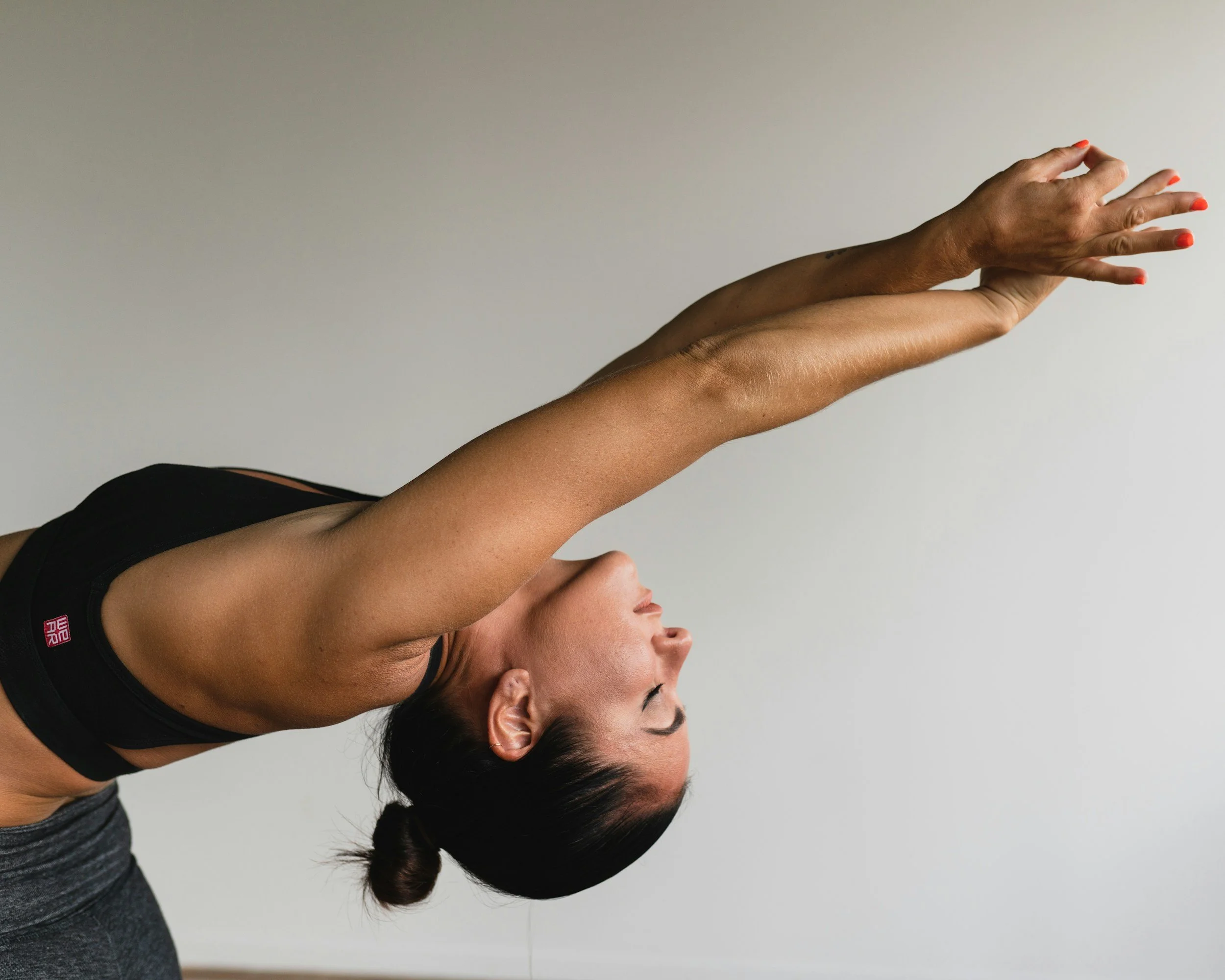
We use mindful, alignment-based movement to support grounding, awareness, and energy regulation.
Practices are adapted to context — from gentle grounding sequences to more activating flows — always with a focus on:
sensing rather than performing
presence over form
sustainability over intensity
Through movement, participants learn to recognize how energy is generated, held, and depleted in the body — and how to work with it consciously rather than pushing against it.
Yoga becomes a tool for listening, not achieving.
Breathwork
& Guided Meditation
Breath and attention directly influence the nervous system and energetic state.
Through accessible breathing techniques and guided meditation, we support:
emotional regulation
stress reduction
increased focus and mental clarity
smoother transitions between intensity and rest
the ability to pause and re-center
These practices cultivate awareness of energetic shifts in real time, supporting more conscious responses to pressure, demand, and change.
They are subtle, effective, and easy to integrate into everyday life and work.
Sound Healing
& Voice Activation
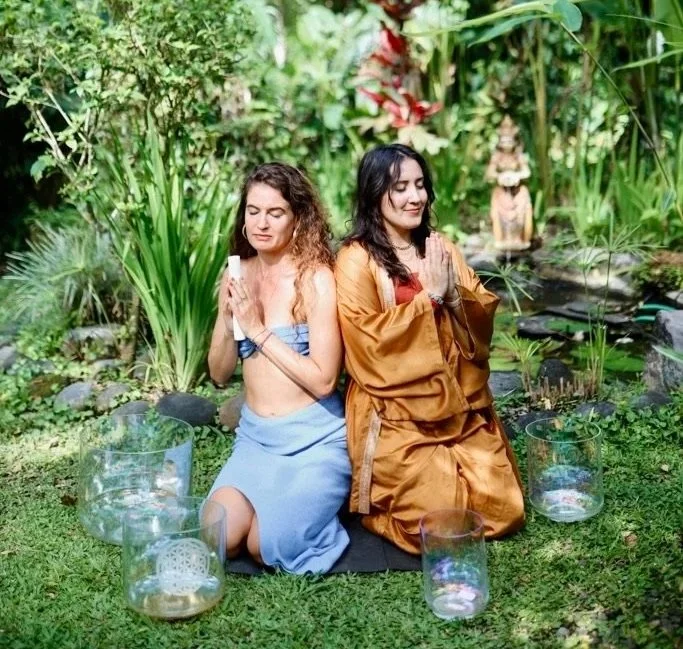
Sound and voice create a powerful, non-verbal space for reflection, expression and integration.
Using crystal singing bowls, toning, and gentle vocal practices, we work with:
deep relaxation and nervous system settling
resonance and vibrational awareness
authentic self-expression and presence
mental quieting
emotional processing
integration of learning and experience
Sound allows the mind to soften; voice activation supports clarity, confidence, and alignment between inner state and outward expression.
Expression, Reflection
& Guided Journaling
Leadership requires expression — not only speaking, but being heard and being felt. Embodied insight deepens when it is consciously reflected and articulated.
Through guided journaling, reflective prompts, and facilitated dialogue, we support:
authentic expression
clarity of intention
alignment between inner state and outward communication
meaning-making and decision awareness
Journaling helps translate felt experience into language — making insights tangible and actionable.
This supports leaders in showing up with coherence and confidence.
Integration:
From Experience to Action

Embodied practice becomes meaningful when it is consciously integrated.
We intentionally connect physical experience with reflection and dialogue, supporting participants in translating sensation, emotion, and insight into clarity and choice. This process helps learning move beyond the moment itself and into everyday leadership, communication, and decision-making.
Integration ensures that embodied insight does not remain abstract, but becomes accessible and applicable over time.
How This Fits Into Our Work
At Studio Suparman Breton, embodied practices are not an add-on — they are a foundational element of how we work.
Across our entire portfolio, mindful movement, breathwork, sound, voice, and reflective practices are intentionally woven into our formats. Adapted to context and audience, these elements support presence, regulation, and clarity — allowing learning to land not only intellectually, but physically and emotionally.
This is what enables our work to create sustainable, lived change.
In Essence
Embodied practices create the conditions for clarity, resilience, and conscious action.
By reconnecting thinking with sensing,
and insight with experience, leaders are supported in responding rather than reacting — with greater awareness, integrity, and coherence.
This is leadership grounded from the
inside out.